
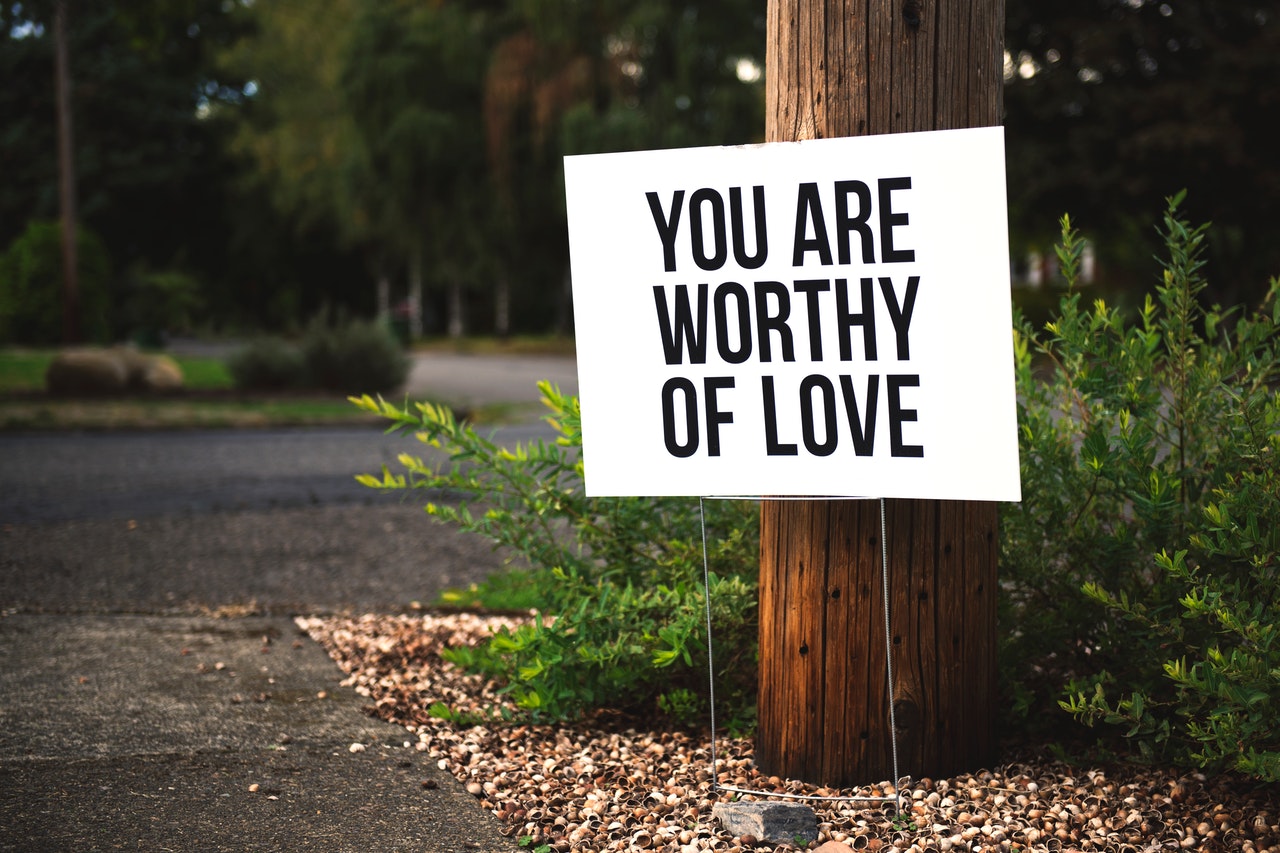
You are making a judgment.
How do you feel in reading that statement or in hearing those words in your head? Do you feel ashamed or do you feel proud? Do you feel accused or do you feel encouraged?
Our language is imperfect, and the way that we use and attribute meaning to words can sometimes get in the way of what we are trying to say. Certain words can trigger strong associations in our minds, and because of these reactions, they can quickly become a block to communication instead of a bridge. One of these trigger words is judgment.
We often talk a lot about having compassion for others instead of judging them. Or we aspire to create and live within a judgment-free zone — which we equate with a space of love and acceptance. In other words, we push away judgment as a bad thing.
Judgment can be defined as “the ability to make considered decisions or come to sensible conclusions.” This is in fact, the primary definition of the word judgment in the Webster’s dictionary of the English language. That does not sound like a bad thing, right? However, more recently, we have taken the idea of judgment on as an evil scourge, mostly in the context of another definition of judgment, as “an opinion or conclusion.”
Recently, I got into a rather heated argument with someone… who, ironically, I felt was judging me for advocating for non-judgment. Huh? Right. Try to wrap your head around that. This person was basically saying that non-judgment is a way of abdicating your duty to develop a considered perspective and then behave in the world accordingly. He argued that those who carry around non-judgment as a torch are in fact acting out a conflict avoidant cop-out from participating in life. He expressed frustration because he viewed my favoring non-judgment as a way of sitting back and giving up personal responsibility.
It took me a while to realize that we were actually talking about two different faces of the word “judgment.” For the sake of simplicity and clarity, I will use two different words to represent these various aspects of judgment. I will use discernment to refer to the ability to make considered decisions or come to sensible conclusions. And judgment to refer to an “an opinion or conclusion.” Still, they sound pretty similar. So what is the distinction?
Judgment needlessly curtails an unlimited resource — love, kindness, compassion.
“That woman is annoying. I can’t stand being around her. Her laugh irritates me, and she is so scatter-brained. I don’t know how she gets anything done being that disorganized.”
Discernment necessarily allocates a limited resource — time, energy, money
“I am going to have dinner with my new friend instead of going to the party because I want to invest in deepening our connection and see how I can help him with his company.”
Judgment categorizes and separates me from you, us from them.
“The people who go to those events are very pretentious. All they do is talk about themselves and how much money they have. I would never act like that even if I were rich.”
Discernment focuses on what is most important to say, think, feel, or do.
“I like connecting with people are passionate about making a difference in the world. I find that when I ask people about what they care about, we bond on a deeper level.”
Judgment is about others.
“She is… he is… they are… what those people do…“
Discernment is for yourself.
“I like it when… I am happier if… I prefer to… I choose…”
Judgment polices thoughts.
“This is good. That is bad. We are right. They are wrong.”
Discernment directs action.
“I will do this. I will not do this. I will focus here. I will not focus there.”
In other words, judgment (the way that I am using it here) is a destructive force and discernment is a creative force. When we say “don’t judge,” we are not advocating to become a spineless, opinionless, passive jellyfish. The ability to take in information, process and sort it, and ultimately select a course of action from it, is after all, a uniquely human gift. Judgment only becomes a danger to ourselves and others only when we use it to destroy; when we allow our envy or insecurity spiral outwards by throwing shame, silently or violently, on others. The intention is to veer away from judging what is bad by others and tearing down, and instead steer towards choosing what is good for ourselves and building up.








Thanks for the thoughtful article, Wendy! One thought I had is whether there is a gender difference in the way we interpret the word "judgment." While I agree with you on your definition of judgment, I can also see my husband say that there is a thing as "good judgment" when making decisions. Perhaps women place judgment on other PEOPLE while men place judgment on THINGS? I think there is a component of what or who we are judging.
To support your perspective, he does say that he makes decisions based on good judgment, which indicates that he uses the "I" and more of discernment according to your definition.
What an interesting idea Rena! I have not investigated much into gender differences but you may be on to something there. I would guess that regardless of basic tendencies, both men and women can judge both people and things, either in a harmful way or in a helpful way. The harmful version looks like us lamenting the status quo, playing victim, separating us, and tearing down others. Your husband’s "good judgment" is what I refer to here as discernment… that is, conscious and empowered allocation of your limited time and energy, towards creating the life you want. Thanks for reading and sharing your reflections! W
There is no difference between judgement and discernment. The association of the word judgement with negative connotations is the difference. We associate judge with courts and punishments. Its not the word that is bad, because discernment and judgment are the same thing. Its our perception of words. Our beliefs and uses of words are the issue, not words themselves. We need to quit blaming every little thing for poor behavior, and get to the root of the problem, like understanding why you feel a certain way about certain controversial subjects, instead of tiptoeing around triggering words. There are core beliefs that can be challenged by understanding your aversion to particular words or actions…not the word itself being bad or good.